Downwinds | Manazuru Crossing

Manazuru Crossing

A 36 Km harbour to harbour downwind run from Manazuru to Enoshima with a SW wind. Manazuru is a town located in Kanagawa Prefecture, Japan. Located in the southeast of Mount Hakone, the consists of the small Manazuru Peninsula, which extends into Sagami Bay from the southeast to the northwest, sandwiched between Odawara City in the north and Yugawara Town in the south.


  • Manazuru, Ashigarashimo County, Kanagawa Prefecture, 259-0201, Japan

    Distance in KM
    36
    Estimated Time to complete
    3 Hrs 30 mins
  • Wind Direction
    SW
    Best months
  • Average Rating
    0.0

    No of Followers:
    0
  • Created
    about 4 years ago
    Last updated
    about 4 years ago
    Kindly shared by:
    downwindfun downwindfun


  • Launch from Manazuru Harbour
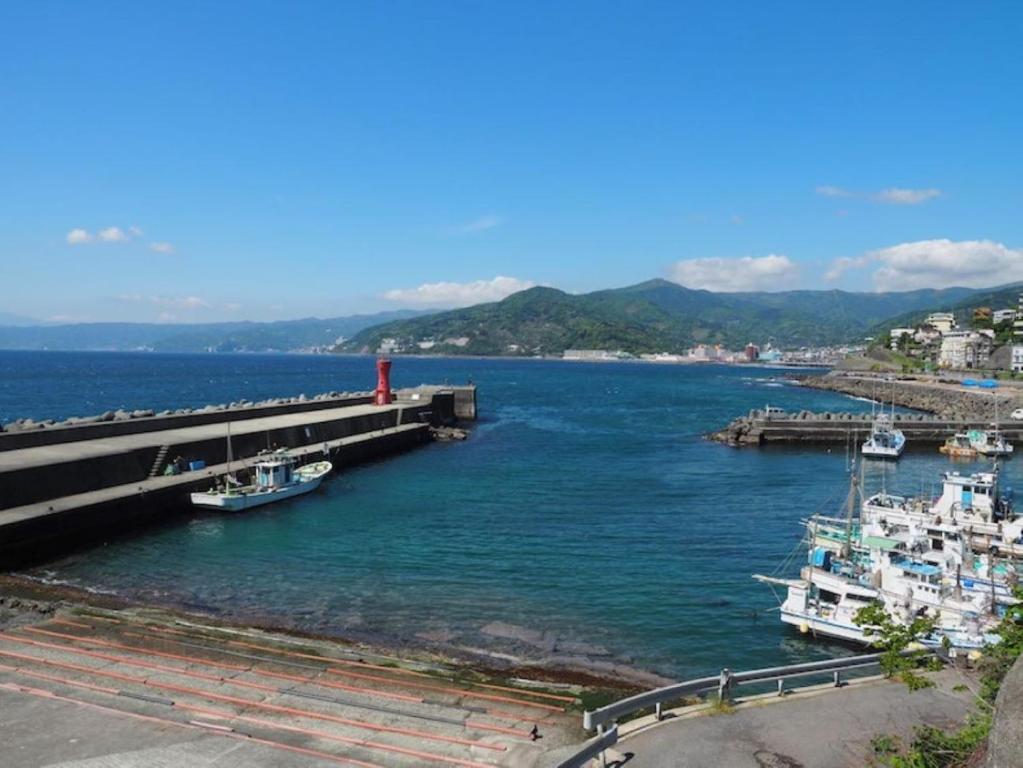
    Manazuru Harbour


    It's only on a clear day you will see where you're heading make sure you know direction and heading, the video of this downwind below shows how the course had to be corrected. (Please read the safety comments from this paddler in his blog afterwards)

    Course correction


    This YouTube video is a translated version with english subtitles, the original video is below this translation from Vimeo by  Kenny Kaneko


    Finish is at Enoshima Harbour.
    Enoshima Harbour (centre of picture to the left)


    A translation from the paddlers blog on the importance of safety for this downwind, PLEASE READ.


    Manazuru Crossing: Downwind is the ultimate fun

    I did downwind from Manazuru to Enoshima with my friends this Wednesday.
    A 25-30 knot southwesterly wind had been blowing since the previous day, so the conditions on the day were not just windy, but swells for two people.


    On the day of the event, Ocean Outrigger Canoe Club members Seiya and Hide will be on the OC-1, and Yaku and I will be on the SUP. Yak is 14 feet. I thought it would be a little unreasonable, but I decided to do it with 12'6 SIC Bullet .

    I think that there are many people who watch the video and think "It looks fun" or "I want to try it!", but in this blog, I would like to write about the dangers of doing downwind in such conditions.


    First of all, everyone who rowed in this condition this time is an experienced person. Experienced OC6 has competed in Molokai races many times and has rowed in rough seas in Hawaii. This time there was no escort boat and it was completely self-responsibility. Even if something happens, it's 10km offshore, so it's impossible to swim back toward land.

    Before doing a downwind like this, you need to practice hundreds of times in rough water, upwind out to sea and downwind.

    And the next thing I have to be careful about is checking the gear. Of course, downwind is different from when you usually paddle and the surface of the sea is rough, so you need a board that can paddle stably and a board that surfs when you get on the swell. In my case, I had the world's best downwind board, SIC's Bullet, so I was relieved, but honestly, I don't think I could have made it to Enoshima if I had the X12Pro, which I usually ride, or a board that was fast in still water. Also, when using OC1, make sure the plug is closed and the canoe is not leaking water. And it is necessary to prepare a spare paddle and check whether the paddle you are using has any cracks.

    Leashes are also very important. When a board falls off, the board is blown away by the wind like a leaf. So a leash that doesn't break is a must. In addition, if the distance is as long as 36km like this time, you will need hydration and energy gel. When going downwind in the Kanto region, it is recommended that you wear clothes that might be too hot, as the wind blows during the cold season. (I usually don't paddle in wet clothes, so I wore Patagonia's R2 Front Zip Fullsuit on that day.)

    And above all, the most important thing is to confirm the destination before starting. If the distance is 35 km like this time, the destination may not be visible to the naked eye. In that case, you need to prepare a compass etc. not only for your senses but also just in case. In fact, this time I thought it was Enoshima, but the destination I was aiming for was different, and I ended up taking a course quite offshore. It is quite difficult to correct the course after being swept offshore, so it is recommended to prepare a compass so that you can row toward your destination.


    Taking this course
    After that, it's quite tiring to stand up and row a distance of more than 30 km in the stormy weather. I really enjoyed riding the swell and walking around on the board for the first hour or so, but for the second and third hours, I couldn't see the destination and my legs were tired, so I felt like I was surviving rather than enjoying myself. So if you're new to downwind or don't have a lot of experience, it's best to do it in calm conditions and short distances.

    If you write so far, you may feel that you are denying doing downwind, but that is not the case at all. I think downwind is the best way to enjoy rowing OC-1 and SUP as long as you don't overdo it with safety management. The time spent rowing on the ocean and matching the rhythm of the swell cannot be replaced by money or anything.

    It is important to paddle with safety first because it is fun. Rowing without an escort boat like this is more dangerous than racing a Molokai. On the other hand, Moloka'i requires one escort boat per person, so there is no danger at all.

    Also, if you participate in a race, other paddlers will be around you and there will be many safety boats, so you can enjoy safely and increase your experience.

    If there is an accident, downwind will not spread, so please enjoy it while ensuring your safety!

    Paddle with Aloha,
    Kenny


    Have fun and please stay safe!
    Some Basic Safety Guidelines

    - It is very difficult to spot someone in the water especially in strong wind conditions, so please make sure you can be seen - use bright colour clothing. Wear a brightly coloured PFD Wear a brightly coloured rash vest ( luminous green or orange is best)

    - Use a buddy system - doing a downwind with someone else is always safer than on your own.

    - Have a VHF Radio, mobile/cell phone in a waterproof bag ( test that you can use this in all conditions)

    - Know who to call for help and be sure that your family know who to call. Be sure that someone knows where you are and when you should return. And that they will call for help if this time is exceeded.

    - Other useful tips - Use a leash from the craft to your body. Have a signal flare (hand held are best) or pencil flares. Carry a reflector / mirror. Have a whistle that works when wet. Have your name and landline number on your craft. Leave a card with your name and phone number (mobile/cell and landline) on your vehicle dashboard.


    0 reviews

  • Back to Downwinds